

TL;DR: 10 PolyAI Competitors Compared
| # | Platform | Best For | Starting Price |
|---|---|---|---|
| 1 | CloudTalk | No-code, multilingual AI voice agents with built-in VoIP | $99/month (AI receptionist, 200 min) |
| 2 | Vapi | Developers who want full API control over their voice stack | $0.05/min + $10/line/month |
| 3 | Bland AI | High-volume outbound calling with branching call logic | $0.14/min |
| 4 | Retell AI | Tech teams wanting realistic voice AI with fast deployment | $0.07+/minute |
| 5 | Kore.ai | Enterprise AI agent lifecycles across every digital channel | Custom, quote-based |
| 6 | Replicant | Contact center automation with pre-built voice solutions | Custom, quote-based |
| 7 | Cognigy | High-volume, omnichannel enterprise support automation | Custom, quote-based |
| 8 | Synthflow | No-code builder for launching AI voice assistants in minutes | Custom, quote-based |
| 9 | Amazon Lex | Scalable conversational interfaces inside the AWS ecosystem | $0.004 per speech request |
| 10 | Google Dialogflow | Established text and voice agent development | Usage-based |
Why Teams Choose PolyAI
PolyAI has become a popular choice for enterprise conversational voice AI. Many large companies consider it for automating phone calls, and customer reviews explain why.
Based on verified G2 reviews, these are the advantages users mention most often.
5 Reasons Teams Choose PolyAI
-
Human-Like Voice QualityReviewers consistently rank PolyAI’s voice output among the best in the industry — authentic, warm, and easy to mistake for a real person on the line.
-
Strong Multi-Turn Conversation HandlingUsers highlight how naturally the platform manages topic changes, interruptions, and casual speech, without breaking the flow of a call.
-
Responsive, Hands-On Customer SupportG2 reviewers repeatedly call out PolyAI’s support team as responsive and helpful, especially during implementation.
-
Enterprise-Grade Reliability at ScaleBanks, telecoms, insurers, and hospitality brands rely on PolyAI to automate high call volumes around the clock without sacrificing consistency.
-
Simple, User-Friendly InterfaceDespite its enterprise focus, PolyAI scores well on ease of use—reviewers note a clean interface that doesn’t require extensive training to operate day to day.

Why Are Teams Searching for a PolyAI Alternative?
PolyAI has become a well-known name in enterprise conversational AI. Users often praise its natural voice and ability to understand customer requests. But when businesses start testing or scaling it, some run into limitations that lead them to look for alternatives similar to PolyAI.
5 Reasons Teams Look for a PolyAI Alternative
-
Occasional Slow PerformanceSome users report that PolyAI can be slow to respond or process commands at times. While it isn’t described as a frequent issue, reviewers say occasional delays can affect the overall experience.
-
Limited Voice AnalyticsSeveral enterprise users would like more advanced voice analytics and reporting. They mention that stronger conversation insights would make it easier to analyze customer interactions and identify opportunities for improvement.
-
Can Struggle With Complex ScenariosA few reviewers note that PolyAI performs well for most conversations but may face challenges in more complex or unusual customer interactions, where additional customization or human support may still be needed.
-
No Public PricingIt’s hard to compare costs because PolyAI doesn’t publish its pricing. Every business needs to contact the sales team for a custom quote, making it difficult to know upfront whether it fits their budget.
-
Telephony Isn’t Built InPolyAI doesn’t run its own VoIP infrastructure, so coverage and call quality depend on whichever telephony partner sits underneath it.


How We Chose the Best PolyAI Alternatives
To build this ranking, we combined hands-on testing with verified user feedback from G2, Reddit, and Quora, focused on the areas where teams most often find PolyAI lacking: pricing transparency, self-serve customization, and built-in telephony.
We evaluated every platform on six pillars.
-
Call StabilityHow reliably the platform handles live inbound and outbound conversations.
-
Overall CostsAdvertised price versus real all-in cost at scale, including add-ons and implementation fees.
-
CRM Deep-SyncNative versus API-based integrations, and how reliably call data lands in the CRM.
-
Global FootprintNumber coverage and telephony reach across markets.
-
Support ResponseHow quickly a live person responds to a technical issue.
-
AI ProductivityHow much manual work — call summaries, tagging, follow-up — the AI actually removes.
What Is the Best Alternative to PolyAI?
CloudTalk is the best PolyAI alternative for sales and support teams that need AI-powered calling. Unlike PolyAI, it combines AI voice agents, global VoIP infrastructure, and built-in analytics in a single platform, with automation, sentiment analysis, smart routing, and CRM integrations included out of the box no separate telephony provider required.
It also offers transparent pricing and you can test the AI Voice Agent with 50 free minutes on signup and try the core calling platform free for 14 days, with no sales-led demo required.
Why Do Teams Consider CloudTalk the Best PolyAI Alternative?
-
Transparent Pricing and Risk-Free TestingNo public pricing makes PolyAI hard to plan around. CloudTalk offers clear AI pricing and a 14-day free trial, so you can evaluate cost and performance before committing.
-
Advanced Voice Analytics Built-InCloudTalk includes Transcription, Sentiment Analysis, and Real-Time Dashboards, so every call produces an actionable insight.
-
No-Code Control Over AI WorkflowsRelying on a tech team to adjust a call flow slows everything down. CloudTalk’s drag-and-drop Call Flow Designer lets you change routing and automation instantly, without a ticket or a call.
-
Inbound and Outbound in One PlatformWhere PolyAI is primarily inbound, CloudTalk automates both directions, so lead follow-up and reminder campaigns don’t require a second vendor.
-
Built-In Global VoIPCloudTalk runs its own telephony infrastructure with local numbers in 160+ countries, so you’re not managing a separate carrier relationship on top of the AI layer.
Skip the Enterprise Sales Cycle
10 Best PolyAI Alternatives: Features Comparison
Here’s how PolyAI stacks up against the top PolyAI competitors on the aspects that actually decide a deal price transparency, deployment speed, and whether you get a real phone system or just a conversational layer.
PolyAI vs. CloudTalk vs. Vapi vs. Bland AI vs. Retell AI
| Feature | PolyAI | CloudTalk | Vapi | Bland AI | Retell AI |
|---|---|---|---|---|---|
| Starting Price | Custom enterprise pricing only | $349/month (1,000 min) | $0.05/min + $10/line/month | $0.14/min | $0.07+/minute |
| Free Trial |  |
 |
|
|
|
| Built-in VoIP | |
|
|
|
|
| AI Call Automation | Primarily inbound | Inbound & outbound | Inbound & outbound | Inbound & outbound | Inbound & outbound |
| Languages Supported | 75+ | 60+ | 140+ (through TTS providers) | Not listed | 60+ |
| No-Code Editing | Limited | Yes | Limited | Yes | Yes |
| Global Phone Numbers | Via third-party providers | 160+ countries, built in | Via third-party providers | Own infrastructure | Limited (US & Canada) |
| Native CRM Integration | Yes | Yes | API-based | API-based | Yes |
| Analytics & Reporting | Limited operational dashboards | Real-time dashboards, Sentiment Analysis, AI Summaries | Usage and call logs | Custom analytics, not core feature | Performance analytics |
The PolyAI Cost Trap
Custom enterprise pricing sounds flexible until you’re the one negotiating it. Without a published price list, teams routinely underestimate what a full deployment costs—telephony integration, implementation services, and account-management support all get quoted separately, on top of the base platform fee.
Top 10 PolyAI Alternatives for 2026
Below are the 10 best alternatives to PolyAI, ranked and reviewed. Each profile covers what the tool does, where it beats PolyAI, its pros and cons, pricing, and real user sentiment.
1. CloudTalk: Best PolyAI Alternative for Sales and Support Teams

What Is CloudTalk?
CloudTalk is a global AI-powered business calling platform built for sales and support teams. It combines AI Voice Agents, VoIP infrastructure, advanced analytics, and native CRM integrations in one system without the enterprise-level complexity that comes with PolyAI’s deployment model.
Why Is CloudTalk a Strong PolyAI Alternative?
-
Built-in VoIP, not a telephony partner you have to managePolyAI doesn’t run its own telephony, so call quality depends on whichever carrier sits underneath it. CloudTalk operates its own global VoIP infrastructure with local numbers in 160+ countries.
-
Transparent pricing you can see before you talk to salesPolyAI’s pricing is entirely custom and quote-based, so teams have no way to budget without going through a sales cycle. CloudTalk publishes its plans starting at $349/month (1,000 min), so you know the real cost upfront.
-
A 14-day free trial, no demo requiredPolyAI offers a sales-led demo instead of hands-on access. CloudTalk gives you 14 days to test call quality, routing, and automation yourself, with no credit card required.
-
No-code Call Flow Designer instead of technical teamsWith PolyAI, many conversation flow changes require support from technical teams, which can slow updates down. CloudTalk’s drag-and-drop Call Flow Designer lets you edit routing and automation yourself in just a few clicks.
What Are the Pros & Cons of CloudTalk?
| Pros | Cons |
|---|---|
| Transparent, usage-based pricing with a 14-day free trial | No native video conferencing |
| Built-in global VoIP—no third-party telephony needed | Solo users may not need its collaboration and routing depth |
| No-code Call Flow Designer for instant routing changes | No support for on-premises landline (PBX) hardware |
What Are CloudTalk’s Plans & Pricing?
CloudTalk pricing starts at $99/month for the AI receptionist (200 minutes), with the following AI Voice Agent plans:
CloudTalk AI Voice Agent Pricing Plans
| Plan | Price | Included Minutes | Key Features |
|---|---|---|---|
| AI Receptionist | $99/month | 200 min (50 free in month one) | 24/7 inbound coverage, 60+ language support, conversational routing (no phone trees) |
| AI Specialist | $349/month | 1,000 min | Everything in AI Receptionist + payment/invoice handling, calendar sync, live and post-call analytics |
| Custom | From $0.15/minute | 10,000+ min | Everything in AI Receptionist + volume discounts and bespoke workflow mapping for high-volume teams |
What Are CloudTalk’s Customers Saying?
CloudTalk users consistently highlight the ease of use, intuitive interface, and affordability.
How Do G2 Users Rate CloudTalk?
CloudTalk’s current G2 rating is 4.4/5, out of 1,844+ verified user reviews.

See Why Teams Choose CloudTalk over PolyAI
2. Vapi: Best for Developers Who Want Full API Control
What Is Vapi?

Vapi is a developer-first platform for building AI voice agents via API. It gives technical teams full control over orchestration, LLM logic, and telephony integrations a very different approach from PolyAI’s more managed, enterprise-led setup.
Why Is Vapi a Strong PolyAI Alternative?
-
Full API accessPolyAI routes most configuration changes through its own team. Vapi gives developers direct API access to call orchestration, AI logic, and infrastructure behavior, with no account manager in the loop.
-
Choice of LLM provider, not a fixed proprietary modelPolyAI runs on its own proprietary voice models. Vapi lets teams plug in whichever LLM provider fits their cost and performance needs.
-
Usable without an enterprise sales processWhere PolyAI requires a custom quote and a demo, Vapi has published, self-serve, usage-based pricing you can start testing immediately.
What Are the Pros & Cons of Vapi?
| Pros | Cons |
|---|---|
| Deep API-level control over the voice stack | Limited no-code tooling for non-technical teams |
| Works with multiple LLM providers | Real cost can run higher than advertised once telephony and LLM usage are added |
| Fast to prototype for developers | Fewer built-in operational dashboards |
What Are Vapi’s Plans & Pricing?
Vapi pricing is usage-based, with the following rates:
- Pay As You Go: $0.05/min + $10/line/month
- Enterprise (Annual Contract): Custom pricing
The Vapi Telephony Surcharge
The $0.05/min rate only covers Vapi’s own layer. Add a telephony provider and an LLM subscription on top, and the real per-minute cost climbs well past what the base rate suggests—the same kind of pricing surprise that pushes teams away from PolyAI.
What Are Vapi’s Customers Saying?
Vapi customers highlight ease of setup and flexibility for building voice AI agents, but report issues with latency, unreliable performance, additional costs, and inconsistent support.
How Do G2 Users Rate Vapi?
Vapi has limited G2 review volume just one review at 4.5/5, since it’s a developer-focused API product. On Trustpilot, it has 15 reviews and an overall rating of 2.4/5.

3. Bland AI: Best for High-Volume Outbound Calling

What Is Bland AI?
Bland AI is a platform for building AI-powered phone agents that automate outbound and inbound calls with human-like voices. Where PolyAI leans inbound-first, Bland AI is built around high-volume, AI-driven outreach.
Why Is Bland AI a Strong PolyAI Alternative?
-
Transparent, usage-based pricingBland AI offers transparent pricing starting at $0.14/min, allowing teams to test outbound automation before scaling spend.
-
Outbound automation built in, not an afterthoughtPolyAI is primarily inbound. Bland AI runs thousands of automated outbound calls per day with high concurrency limits, covering the direction PolyAI doesn’t prioritize.
-
Branded voice personas without an enterprise contractWhere PolyAI’s customization runs through account management, Bland AI gives teams direct control over branded voice personas and call logic.
What Are the Pros & Cons of Bland AI?
| Pros | Cons |
|---|---|
| Powerful conversational capabilities | Not a full telephony platform |
| High concurrency for large outbound volumes | Steep learning curve for complex call flows |
| Branded voice personas | Troubleshooting can be harder across transcription, prompts, and call logic layers |
What Are Bland AI’s Plans & Pricing?
Bland AI pricing is plan-based, with per-minute rates that drop as you move up tiers:
Bland AI Pricing Plans
| Plan | Per-Minute Rate | Platform Fee | Key Features |
|---|---|---|---|
| Start | $0.14/min | $0/month, no card required | 2 credits + inbound number ($15/mo value), 100 calls/day cap, 10 concurrent calls, 1 voice clone, 10 knowledge bases, $0.05/transfer min |
| Build | $0.12/min | $299/month | 2,000 calls/day cap, 50 concurrent calls, 5 voice clones, 50 knowledge bases, $0.04/transfer min |
| Scale | $0.11/min | $499/month | 5,000 calls/day cap, 100 concurrent calls, 15 voice clones, 100 knowledge bases, $0.03/transfer min |
| Enterprise | Custom | Contracted to volume | Concurrency sized to volume, on-prem/VPC available, forward deployed engineer available, BAA, SSO, data residency |
The Bland AI Transfer-Minute Catch
The per-minute rate drops as you move up tiers, but call transfers still bill separately at $0.05, $0.04, or $0.03 per transfer minute depending on your plan. High-transfer workflows can end up costing noticeably more than the headline rate implies.
What Are Bland AI’s Customers Saying?
Bland AI customers highlight its ease of use and powerful conversational voice capabilities, but note a learning curve and complexity when moving beyond basic use cases.
How Do G2 Users Rate Bland AI?
Bland AI’s current G2 rating is 5/5, based on 11+ verified user reviews.

4. Retell AI: Best for Fast, Realistic Voice Deployment
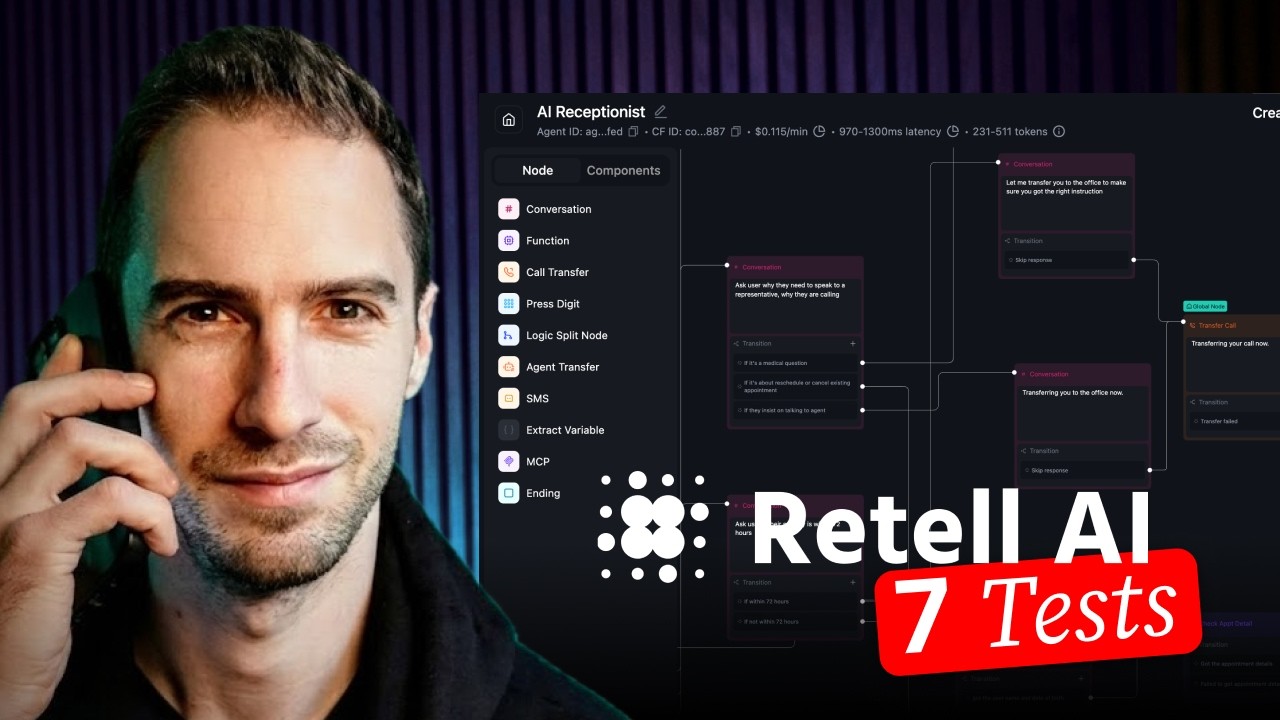
What Is Retell AI?
Retell AI focuses on realistic conversational agents with fast setup and minimal technical overhead a much lighter deployment model than PolyAI’s enterprise-led rollout.
Why Is Retell AI a Strong PolyAI Alternative?
-
$10 in free credits instead of a demo-only entry pointPolyAI requires a sales conversation before you can test anything. Retell AI gives new signups $10 in free credits to try the platform directly.
-
Deployment in days, not an enterprise implementation timelinePolyAI’s rollout runs through dedicated account teams and integration cycles. Retell AI is built for teams that want to go from idea to a live agent quickly.
-
Compliance coverage without the enterprise price tagRetell AI ships SOC 2, HIPAA, and GDPR compliance at a fraction of PolyAI’s typical enterprise contract size.
What Are the Pros & Cons of Retell AI?
| Pros | Cons |
|---|---|
| Fast to deploy, intuitive workflow builder | Limited built-in VoIP infrastructure |
| Enterprise-grade compliance (SOC 2, HIPAA, GDPR) | Fewer native CRM integrations than full phone systems |
| $10 in free credits to start testing | Struggles with highly complex, dynamic conversational logic |
What Are Retell AI’s Plans & Pricing?
Retell AI pricing is fully pay-as-you-go, with no mandatory subscription:
- Pay As You Go: From $0.07/minute for AI Voice Agents, or $0.002+/message for AI Chat Agents; $10 free credits on signup
- Enterprise: Custom pricing
The Retell AI Free-Credit Countdown
$10 in signup credit sounds generous until you do the math—at $0.07+/minute, it covers a little over two hours of calls. Teams that want to test real call volume, not just a demo, hit the pay-as-you-go rate fast.
What Are Retell AI’s Customers Saying?
Retell AI customers highlight that they can go from idea to a working voice agent quickly, thanks to an intuitive interface and clear workflow builder, but note the platform struggles with highly complex or dynamic conversational logic compared to more developer-first tools.
How Do G2 Users Rate Retell AI?
Retell AI’s current G2 rating is 4.8/5, out of 2,639+ verified user reviews.

5. Kore.ai: Best for Enterprise AI Agent Lifecycles

What Is Kore.ai?
Kore.ai is an enterprise-grade conversational AI platform for orchestrating virtual assistants across voice and digital channels. It shares PolyAI’s enterprise focus, but spreads across more channels than voice alone.
Why Is Kore.ai a Strong PolyAI Alternative?
-
Omnichannel coverage beyond PolyAI’s voice-first scopePolyAI is built primarily around voice. Kore.ai automates voice, chat, messaging apps, and web channels from a single platform.
-
Manages the full agent lifecycle, not just conversation designWhere PolyAI’s iteration runs through account management, Kore.ai gives enterprise teams tools to design, deploy, and optimize agents across their lifecycle.
-
Strong analytics for tracking outcomes across channelsKore.ai’s reporting extends further than PolyAI’s intent-focused analytics, covering performance across every automated channel.
What Are the Pros & Cons of Kore.ai?
| Pros | Cons |
|---|---|
| Manages the full AI agent lifecycle across channels | Implementation is complex and resource-intensive |
| Strong compliance and security posture | Pricing is enterprise-focused and quote-based, same as PolyAI |
| Scales well for large deployments | Requires dedicated technical teams to run |
What Are Kore.ai’s Plans & Pricing?
Kore.ai uses enterprise, quote-based pricing the same transparency gap teams are often trying to escape from PolyAI in the first place.
The Kore.ai Enterprise Contract Trap
Like PolyAI, Kore.ai doesn’t publish rates. Budgeting requires a sales conversation and a contract commitment before you know what you’re actually paying — the exact opposite of the self-serve evaluation most teams want.
What Are Kore.ai’s Customers Saying?
Kore.ai customers consistently point to strong omnichannel automation and scalability for large deployments, but highlight a steep learning curve and usage limitations.
How Do G2 Users Rate Kore.ai?
Kore.ai’s current G2 rating is 4.6/5, out of 474+ verified user reviews.

6. Replicant: Best for Contact Center Automation

What Is Replicant?
Replicant is a voice AI platform built for contact centers that want to automate repetitive inbound calls without a live agent on every interaction the closest comparison to PolyAI’s core use case on this list.
Why Is Replicant a Strong PolyAI Alternative?
-
Pre-built voice solutions instead of a custom build cyclePolyAI deployments typically start from a custom implementation. Replicant is pre-trained on tens of millions of real conversations, which shortens the path to production.
-
Multilingual and multichannel support out of the boxReplicant supports multilingual, multichannel automation without the customization process PolyAI relies on.
-
Purpose-built for autonomous contact centersReplicant is focused on building fully autonomous contact centers, which makes it more specialized and deeper in that area compared to PolyAI’s broader enterprise approach.
What Are the Pros & Cons of Replicant?
| Pros | Cons |
|---|---|
| Pre-built voice solutions for common contact-center requests | Less flexibility for outbound sales automation |
| Handles multilingual, multichannel support well | No built-in dialer or VoIP infrastructure |
| Strong for high-volume inbound automation | No free trial—enterprise sales process required |
What Are Replicant’s Plans & Pricing?
Replicant uses enterprise, quote-based pricing, similar to PolyAI’s custom contract model.
The Replicant Sales-Cycle Catch
There’s no self-serve tier and no published rate card—every deployment starts with a sales conversation sized to your call volume. Teams hoping to skip PolyAI’s enterprise sales cycle will find Replicant asks for the same commitment upfront.
What Are Replicant’s Customers Saying?
Users highlight fast, natural conversations and strong performance on high-volume calls, but flag less flexibility for AI resolving complex issues.
How Do G2 Users Rate Replicant?
Replicant’s current G2 rating is 4.7/5, out of 45+ verified user reviews.
7. Cognigy: Best for High-Volume Omnichannel Enterprise Support

What Is Cognigy?
Cognigy (now part of NICE) is a conversational AI platform for enterprises automating customer interactions across voice and digital channels, built around structured, complex workflows in high-volume contact centers.
Why Is Cognigy a Strong PolyAI Alternative?
-
True omnichannel orchestrationWhile PolyAI focuses mainly on voice conversations, Cognigy lets teams manage customer journeys across voice, web chat, email, SMS, and messaging apps like WhatsApp from a single system.
-
Low-code visual builderCognigy provides a node-based visual flow builder that allows business and operations teams to design and adjust complex conversational workflows without depending heavily on developers.
-
Deep enterprise integrationsCognigy offers out-of-the-box integrations with contact center and CRM suites, enabling direct access to CRM data and the ability to execute actions inside existing contact center infrastructure.
What Are the Pros & Cons of Cognigy?
| Pros | Cons |
|---|---|
| Strong omnichannel and multilingual coverage | Less optimal for small teams |
| Handles complex, structured workflows well | Implementation can be resource-intensive |
| Built for enterprise scale | Quote-based pricing, same transparency gap as PolyAI |
What Are Cognigy’s Plans & Pricing?
Cognigy uses enterprise, quote-based pricing.
The Cognigy Implementation Cost
The quote covers the platform license—not the resourced technical team most deployments need to configure workflows and integrate telephony. Factor in implementation time before comparing the headline number to PolyAI’s.
What Are Cognigy’s Customers Saying?
Cognigy customers praise Cognigy.AI for its ease of use and fast setup, but mention limited analytics and restrictions in handling more complex workflows and advanced use cases.
How Do G2 Users Rate Cognigy?
Cognigy’s G2 rating is 4.6/5, out of 13+ verified user reviews.

8. Synthflow: Best No-Code AI Voice Builder
What Is Synthflow?
Synthflow is a no-code AI voice platform built to help businesses launch voice assistants quickly, with its own in-house telephony infrastructure rather than a third-party dependency.
Why Is Synthflow a Strong PolyAI Alternative?
-
No-code editingSynthflow’s no-code visual builder lets teams edit and deploy changes themselves.
-
Owned telephony infrastructure, not a third-party dependencyPolyAI requires a separate telephony partner. Synthflow runs its own infrastructure, supporting thousands of concurrent calls at 99.99% uptime.
-
Broader CRM integrationsInstead of limited enterprise setups, Synthflow connects directly with tools out of the box, while PolyAI typically relies on more managed or partner-led integrations.
What Are the Pros & Cons of Synthflow?
| Pros | Cons |
|---|---|
| No-code visual builder—fast to launch | Limited enterprise-level customization |
| Own telephony infrastructure, no third-party dependency | Fewer advanced analytics and operational tools |
| Strong compliance stack out of the box | Usage-based pricing can be harder to predict at scale |
What Are Synthflow’s Plans & Pricing?
Synthflow uses usage-based pricing that varies by volume and features.
The Synthflow Scale Surprise
Rates depend on volume and feature tier, but neither is published upfront. Teams often can’t model their real cost until they’ve already started scaling call volume, which makes early budgeting a guessing game.
What Are Synthflow’s Customers Saying?
Synthflow customers highlight fast, self-serve deployment but mention high pricing and cost scaling at higher usage, along with a learning curve for advanced workflows.
How Do G2 Users Rate Synthflow?
Synthflow’s G2 rating is 4.5/5, out of 1,015+ verified user reviews.

9. Amazon Lex: Best for Teams Already Running on AWS

What Is Amazon Lex?
Amazon Lex is AWS’s conversational AI service for building voice and chat bots on the same technology behind Alexa built for teams already operating inside the AWS ecosystem.
Why Is Amazon Lex a Strong PolyAI Alternative?
-
Usage-based pricing you can model in advancePolyAI’s custom quotes make cost forecasting difficult. Amazon Lex publishes per-request pricing that teams can estimate directly against expected volume.
-
Omnichannel capabilitiesIt supports both voice and text interactions, allowing you to build conversational self-service bots that work identically over the phone, web, or mobile apps.
-
Deep AWS ecosystem integrationFor teams already running on AWS infrastructure, Lex plugs directly into services PolyAI has no native connection to.
What Are the Pros & Cons of Amazon Lex?
| Pros | Cons |
|---|---|
| Transparent, usage-based pricing | Requires technical expertise to set up and manage |
| Scales well within AWS infrastructure | No built-in telephony—needs Amazon Connect or a third-party provider |
| Flexible bot logic customization | Steeper learning curve outside the AWS ecosystem |
What Are Amazon Lex’s Plans & Pricing?
- $0.004 per speech request
- $0.00075 per text request
The Amazon Lex Hidden Infrastructure Cost
The per-request rate looks like the cheapest option on this list, but it doesn’t include actual phone calling. Add Amazon Connect or a third-party telephony provider, and the real cost of a working calling setup climbs well beyond the headline price.
What Are Amazon Lex’s Customers Saying?
Amazon Lex customers highlight strong AWS integration and scalability, while noting that advanced flow management is complex and costs can rise quickly at scale.
How Do G2 Users Rate Amazon Lex?
Amazon Lex’s G2 rating is 4.2/5, out of 39+ verified user reviews.

10. Google Dialogflow: Best for Established Text and Voice Agent Development
What Is Google Dialogflow?
Google Dialogflow is a conversational AI platform from Google Cloud for building voice and chat-based agents that integrate across websites, apps, and telephony systems.
Why Is Google Dialogflow a Strong PolyAI Alternative?
-
Deep context handlingIt excels at managing complex, multi-turn conversational flows, tracking session context, and routing complicated branching dialogues.
-
Multi-platform deployment beyond voice aloneDialogflow deploys across websites, apps, and telephony systems, extending past PolyAI’s voice-first focus.
-
Backed by Google Cloud’s global infrastructureFor teams that want infrastructure-level reliability without negotiating an enterprise contract, Dialogflow’s Google Cloud backbone is a direct answer to PolyAI’s account-managed enterprise model.
What Are the Pros & Cons of Google Dialogflow?
| Pros | Cons |
|---|---|
| Reliable Google Cloud infrastructure | Lacks built-in, out-of-the-box business intelligence tools |
| Flexible text and voice agent development | Limited long-term user memory |
| Broad multi-platform deployment | Fewer no-code features for non-technical business users |
What Are Google Dialogflow’s Plans & Pricing?
Usage-based pricing through Google Cloud, billed per text and voice request.
What Are Google Dialogflow’s Customers Saying?
Google Dialogflow customers highlight seamless Google Cloud and contact center integrations, while noting that advanced conversation design has a steep learning curve and pricing can increase quickly as usage grows.
The Google Dialogflow Add-On Costs
The per-request billing looks lean, but it doesn’t include the business intelligence tooling or telephony integration most teams end up adding separately — costs that don’t show up until you’re already building.
How Do G2 Users Rate Google Dialogflow?
Google Dialogflow’s G2 rating is 4.4/5, out of 134+ verified user reviews.

How to Choose the Right PolyAI Alternative for Your Team
Rather than comparing long feature lists, start with what you actually need the platform to do. Here are the most common scenarios and the best alternatives for each one.
What Is the Best PolyAI Alternative for Contact Center Automation?
If you’re automating high-volume, repetitive inbound support calls, you want a platform purpose-built for that pattern rather than a general-purpose conversational layer.
Top picks: CloudTalk (AI-powered call center with built-in telephony and automation), Replicant (purpose-built for contact center automation), or Cognigy (omnichannel support for enterprise teams).
Which PolyAI Alternative Is Best for Voice-First IVR and Call Automation?
If you mainly need AI for phone calls, IVR, or outbound calling, look for a platform with built-in telephony and reliable voice performance.
Top picks: CloudTalk (built-in VoIP with native AI voice agents) or Retell AI (fast deployment and natural-sounding voice conversations).
What’s the Best PolyAI Alternative for SMBs and Growing Teams?
If you’re a small or growing business, you’ll probably want a platform that’s easy to set up, affordable, and doesn’t require developers.
Top pick: CloudTalk (transparent pricing, and a no-code Call Flow Designer).
What Is the Best Free PolyAI Alternative?
If you want to test a platform before committing, look for one with a free trial or free credits.
Top pick: Retell AI ($10 in free credits when you sign up).
Overall, What Is the Best PolyAI Alternative Worth Switching To?
Top Pick: CloudTalk is the definitive upgrade for sales and support teams that need complete AI calling capability inbound, outbound, VoIP, and CRM sync instead of a conversational layer you still have to wire into a phone system.
See CloudTalk in Action
Ready to Make the Switch From PolyAI?
If PolyAI’s pricing opacity, limited self-serve customization, or lack of built-in telephony are holding your team back, here’s what switching to CloudTalk actually gets you:
-
A complete calling platformPhone numbers in 160+ countries, native CRM integrations, and real-time analytics in one place.
-
AI voice agents for real conversationsInbound and outbound automation at scale, with seamless handoffs to human agents and automatic CRM updates after every call.
-
Predictable pricing with no custom-quote runaroundPlans starting at $350/month, with the cost you see being the cost you pay.
Stop waiting on a sales cycle just to find out if a platform fits your budget.
Stop Waiting on a Sales Cycle
FAQs about PolyAI Alternatives
Answers to the most common questions about PolyAI, its competitors, and switching to a more transparent AI calling platform in 2026.


